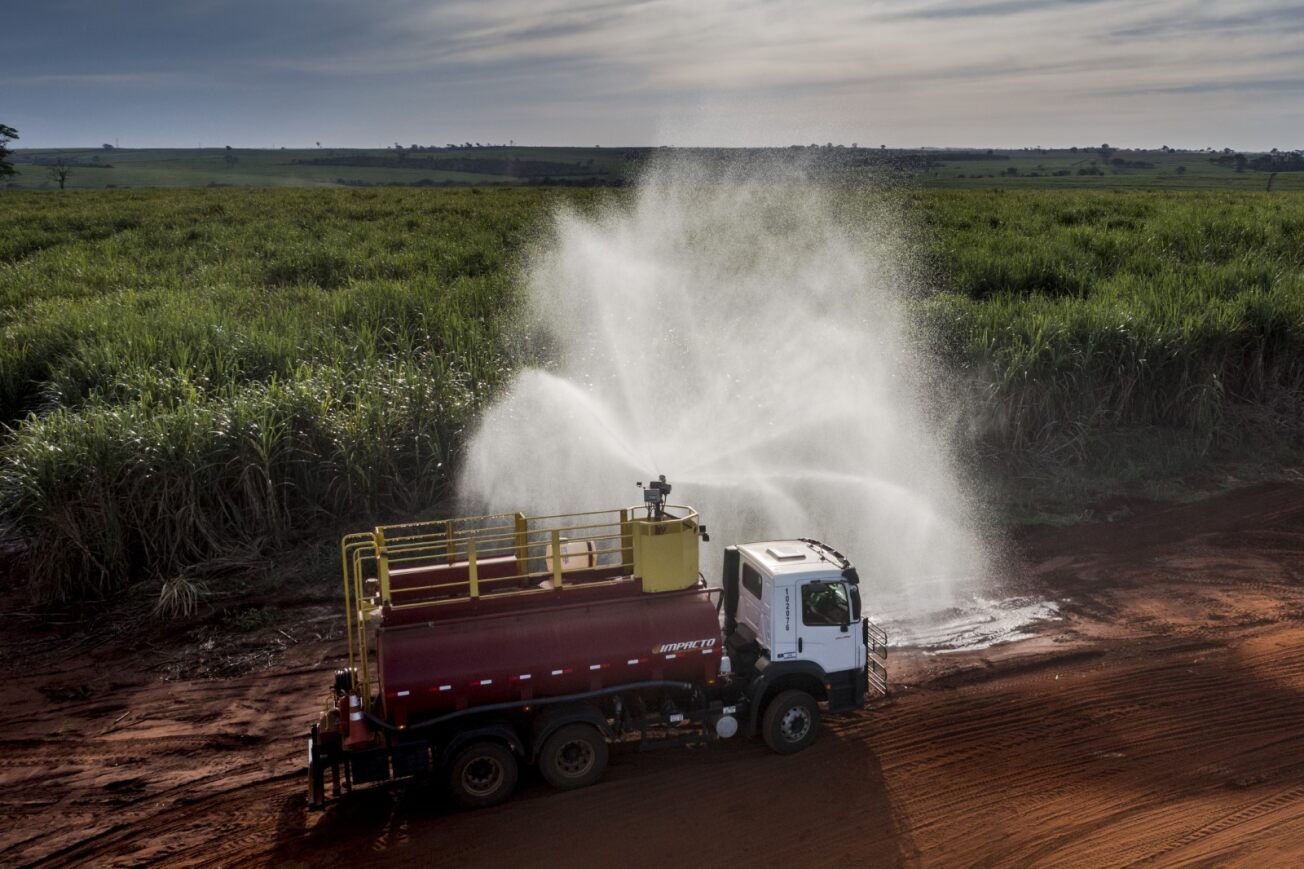



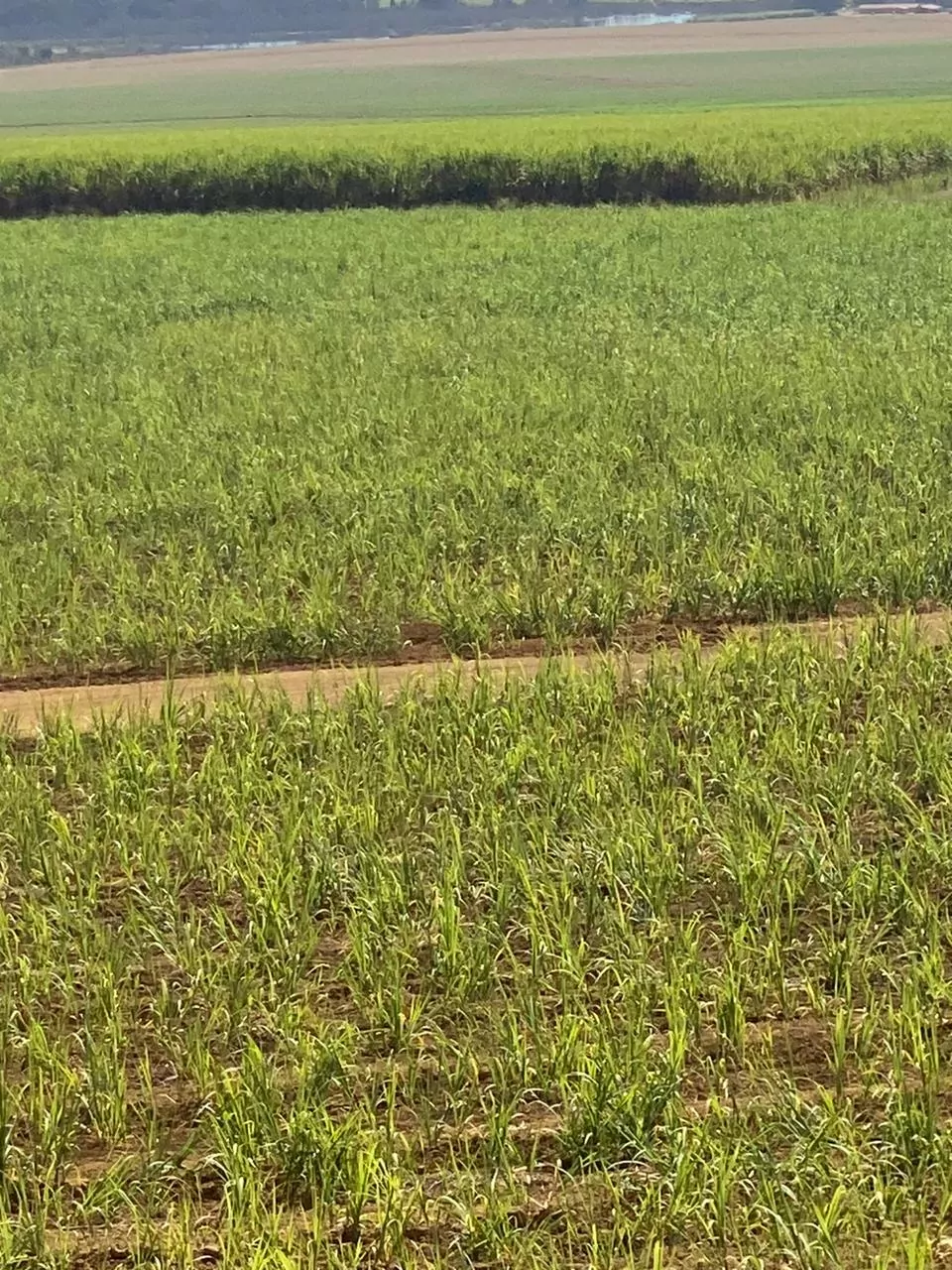
Adverse weather conditions—marked by drought, intense heat, and erratic rainfall—have affected the growth of sugarcane crops and are expected to result in a 1.6% decline in national production for the 2025/26 harvest, according to data released by the National Supply Company (Conab) on Tuesday (4). The estimate is for 666.4 million metric tons harvested, despite a 2.4% increase in planted area, which totals 8.97 million hectares.
Falling Productivity
The national average yield is projected at 74,259 kilograms per hectare, a 3.8% decrease compared to the previous harvest. According to Conab, less favorable weather conditions in 2024 and early 2025—including water shortages, excessive heat, and erratic rainfall—have hampered crop development, especially in the Center-South, the main producing region.
Southeast Sees Largest Losses
The Southeast region, which accounts for most of the country’s production, is expected to harvest 420.2 million metric tons, a 4.4% decline from last season. The state of São Paulo, the country’s largest producer, is bearing the brunt of the impact, with a decrease of 18.2 million metric tons. The prolonged drought, high temperatures, and fires in some areas of São Paulo have hindered regrowth and the growth of sugarcane fields.
In the North, the outlook also points to a slight decline. Even with an increase in planted area, production is expected to total 4 million metric tons, limited by unfavorable weather conditions.
Midwest Continues to Grow as Planted Area Expands
The Midwest region was less affected by adverse weather conditions. With a 6% increase in harvested area—from 1.85 million to 1.96 million hectares—production is expected to reach 151 million metric tons, up 3.9%. Average yield, however, fell by 1.9%, to 77,024 kilograms per hectare.
In the Northeast, production is expected to remain stable, with a slight increase of 1.3%, totaling 55.1 million metric tons. Average productivity is expected to remain close to 60,630 kilograms per hectare, with a modest increase in planted area.
The South is the only region to have seen significant gains in productivity and cultivated area, driven by more regular rainfall. Estimated production stands at 36.2 million metric tons, a 7.7% increase over the previous harvest.
Byproducts: Sugar Up, Ethanol Down
Even with lower sugarcane availability, sugar production is expected to reach 45 million metric tons, a 2% increase over the previous cycle. If confirmed, this will be the second-highest volume on record, second only to the 2023/24 season, when 45.68 million metric tons were produced.
Total ethanol production—including both sugarcane and corn—is expected to fall by 2.8%, reaching 36.2 billion liters. This decline is driven by a 9.5% drop in sugarcane-based production, estimated at 26.55 billion liters. In contrast, corn-based ethanol continues to expand and is expected to grow by 22.6%, reaching 9.61 billion liters.
Of the total ethanol produced, 13.58 billion liters will be anhydrous ethanol, used as a gasoline blend, and 22.16 billion liters will be hydrated ethanol, intended for direct consumption.
Overview CONAB emphasizes that the combination of erratic weather and high temperatures was the main factor affecting productivity in the major producing regions. Despite regional fluctuations, the sector remains moderately optimistic, buoyed by the expansion of planted area, technological advances, and the diversification of production to include corn-based ethanol, which has ensured greater stability for Brazil’s sugar-and-ethanol sector.